Plateelbakkerij Zuid-Holland (PZH)
Antique Dutch Gouda "Damascus" Vase
Antique Dutch Gouda "Damascus" Vase
Out of stock
Couldn't load pickup availability
This exquisite twin-handled vase is a verified studio piece from the Plateelbakkerij Zuid-Holland (PZH) factory, dating circa 1910–1915. A quintessential example of Art Nouveau (Jugendstil) design from Gouda, Netherlands, it features the celebrated 'Damascus' pattern.
Known for its intricate, hand-painted motifs inspired by traditional Iznik ceramics, this high-glaze piece bears the hand-incised monogram of artist 'DS,' marking it as a unique work of early 20th-century ceramic art.
Dimensions
Dimensions
- Height: 20.2 cm
- Diameter: 11.4 cm
Condition
Condition
- Excellent - This antique Gouda "Damascus" vase is in excellent vintage condition for its age, which is a testament to its quality and careful previous ownership.
Glaze & Surface: The high-glaze finish remains exceptionally crisp and vibrant, with the deep cobalt and sage tones showing no significant fading.
Structural Integrity: There are no cracks, chips, or professional repairs to the body, rim, or base.
Handle Condition: Both handles are fully intact and structurally sound, showing no signs of stress or previous fractures.
Crazing: As is common with early 20th-century Dutch pottery, there is fine, age-appropriate crazing visible under close inspection; however, this does not detract from the visual appeal and is a hallmark of its heritage.
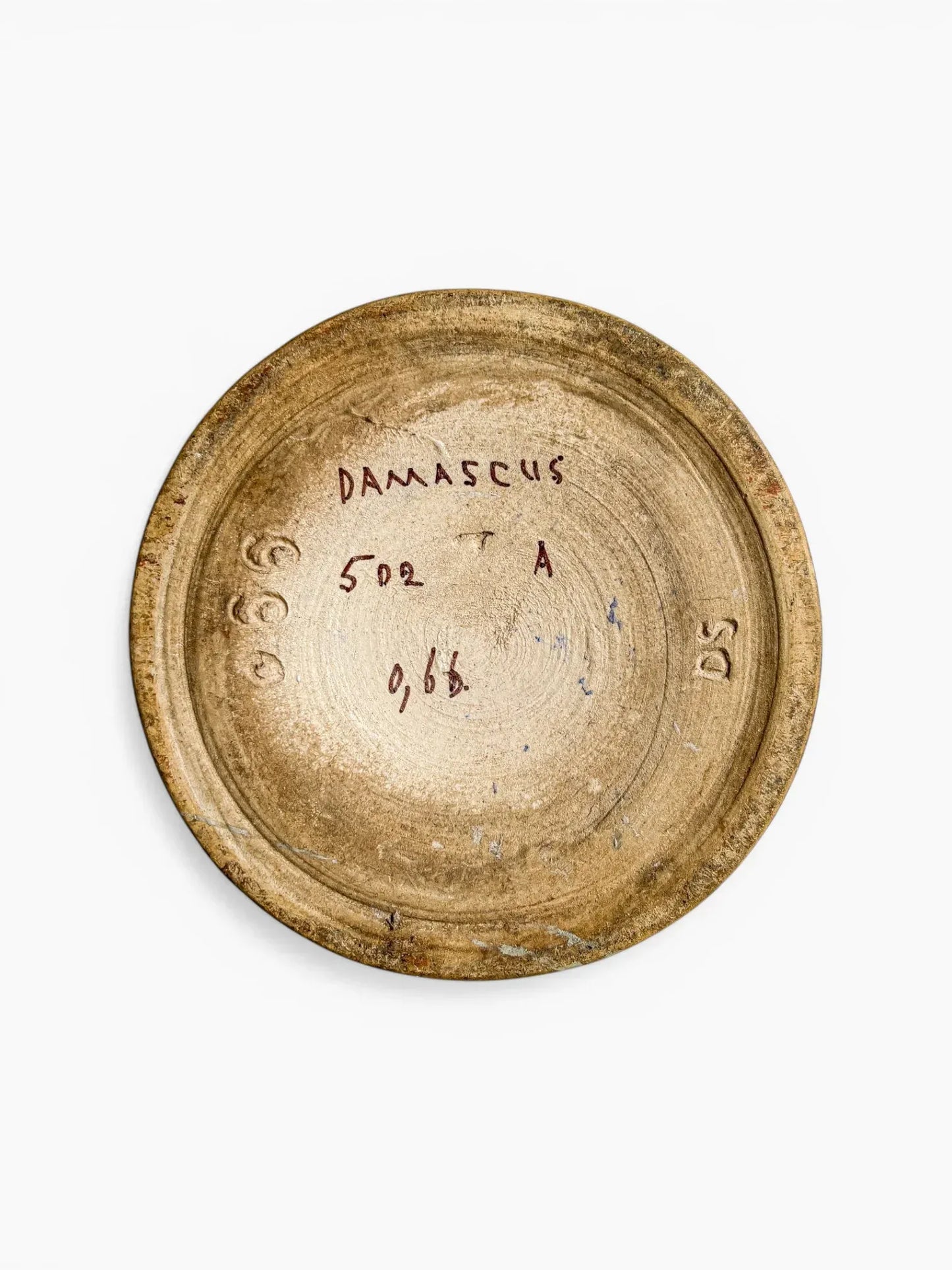
Base Markings: All hand-incised and painted marks—including the "Damascus" decor name, shape 502, and "DS" artist initials—are clear and legible.
Additional Information
Additional Information
1. Design & Features
- The vase stands at 20cm in height, featuring a distinctive tapered body that transitions into a rounded shoulder and a flared rim.
- Two elegantly curved handles are integrated into the neck, providing a balanced, architectural silhouette.
- The "Damascus" pattern is a masterclass in early 20th-century Dutch Art Nouveau, blending rhythmic geometric lines with stylised floral motifs.
- The palette is a sophisticated mix of deep cobalt blue, sage green, and soft cream, creating a visual depth that is characteristic of high-glaze Gouda pottery.
2. Authenticity & Markings
The base of the vase features several hand-incised and painted marks that confirm its provenance:
- "DAMASCUS": The specific pattern name.
- "502": The factory shape/model number.
- "DS": The unique initials of the plateelschilder (pottery painter).
- "990" & "A": Production and internal factory codes typical of early PZH studio work.
3. Craftsmanship
- As a product of the Plateelbakkerij Zuid-Holland (PZH) factory, this piece represents the pinnacle of Dutch ceramic artistry.
- It was hand-painted by a skilled plateelschilder, as evidenced by the "DS" artist initials on the base.
- The patterns were often applied using a "slib-techniek" (slip-trailing) or precise brushwork before being fired to achieve its signature lustrous finish.
- Every stroke reflects the artisan-focused studio environment of the early 1900s, ensuring that no two pieces from this range are exactly alike.
4. Uses & Versatility
This vase is as functional as it is decorative. While it serves as a commanding standalone art piece for a shelf or entryway, its 20cm height and sturdy base make it ideal for:
- Floral Arrangements: The deep blues and greens provide a stunning contrast to neutral-toned dried botanicals, such as eucalyptus.
- Shelf Styling: Its sculptural form adds height and historical interest to a curated bookshelf or a "Clean Aesthetic" display.
- Heritage Collections: A vital addition for collectors focusing on Dutch pottery or Art Nouveau heritage pieces.
5. Care Instructions
To maintain the integrity of the glaze and the vibrancy of the hand-painted decor, please follow these care guidelines:
- Cleaning: Hand wash only using lukewarm water and a mild, non-abrasive detergent. Avoid soaking for extended periods.
- Drying: Gently pat dry with a soft, lint-free microfibre cloth to prevent water spots on the high-glaze finish.
- Environment: Keep the vase out of direct, prolonged sunlight to protect the pigment and avoid placing it near high-heat sources to prevent crazing.
- Handling: Always lift the vase by its body rather than solely by the handles, as antique ceramic joins can become brittle over time.
Share