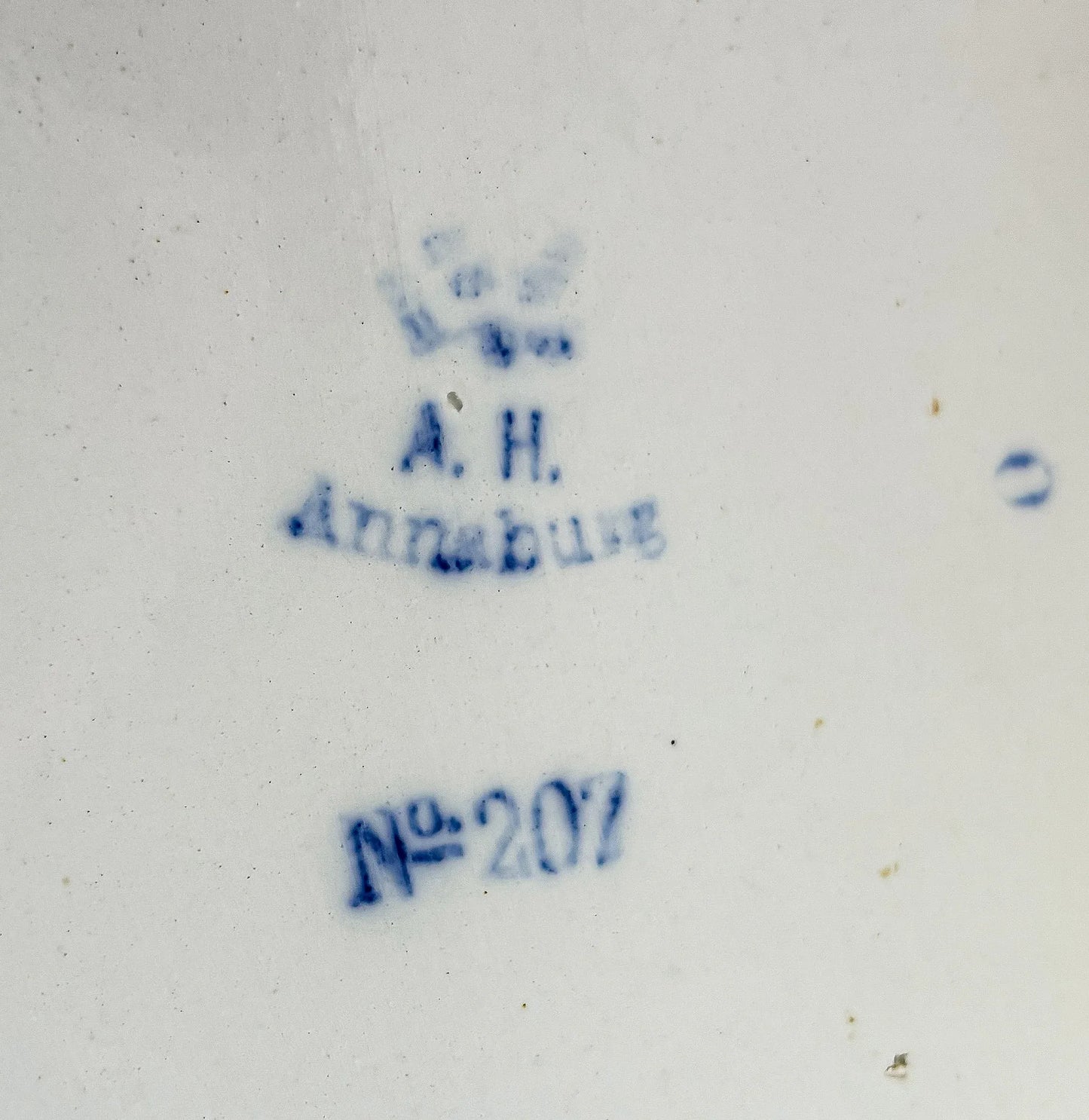
Steingutfabrik Adolf Heckmann
Antique German Blue & White ‘Mehl’ Stoneware Kitchen Box
Antique German Blue & White ‘Mehl’ Stoneware Kitchen Box
1 in stock
Couldn't load pickup availability
A beautiful piece of authentic European kitchenalia for your pantry or kitchen shelving. This antique German wall-hanging storage box (Wand-Salzbox style) was crafted by the renowned Steingutfabrik Adolf Heckmann in Annaburg, Germany, dating between 1883 and 1923.
Beautifully decorated in a deep cobalt blue design reminiscent of classic Zwiebelmuster (Blue Onion) patterns, the front features the word "Mehl." (Flour) in crisp, elegant Gothic Fraktur script. Designed to be wall-mounted or to sit proud on a farmhouse countertop, it features its rare, completely original hinged wooden lid that has developed an incredible, warm patina over the last century.
Dimensions
Dimensions
- Total Height: 21.6 cm
- Width: 16.5 cm
- Depth / Projection: 11.3 cm
- Basin Height: 11.4 cm
Condition
Condition
- Good - This piece remains completely structurally sound, functional, and aesthetically beautiful, displaying an exceptional level of preservation for utilitarian kitchenalia that is over a century old.
1. Ceramic Body & Glaze:
- The earthenware (Steingut) body is structurally robust and heavy.
- The high-fired glossy glaze features a beautiful, dense network of natural age-crazing throughout, giving it a soft, authentic antique patina.
- The top mounting eyelet on the backplate is in pristine condition, showing no radiating hairline fractures or stress cracks around the hole.
- There is a single, historic, stable glaze chip/flea bite located on the bottom right-hand corner edge of the flat back panel. This is entirely hidden from sight when the piece is mounted on a wall or sitting on a shelf.
- Faint, characterful "rusting" (minor localised glaze wear and light tea-coloured staining) is present along the top inner rim of the basin and the lower front base edge, typical of a piece exposed to historic kitchen moisture and daily use.
2. Wooden Lid & Hardware:
- The thick, hinged wooden lid is entirely original and retains a gorgeous, warm, rustic patina with prominent natural knots, historic ring marks, and light weathering.
- A minor, stable hairline split is present on the thin back structural bar of the wood near the left hinge pin. It does not affect the structural integrity or movement of the lid.
- There is a tiny bit of historic chipping/wear on the left edge of the lid where it sits into the ceramic side notch.
- The original metal hinge pins are intact and secure. They show age-appropriate oxidisation (rusting), which has caused some light, authentic staining to the immediate ceramic sockets around the pinholes.
- The lid opens and closes smoothly, but moves slightly from side to side.
Additional Information
Additional Information
1. Design & Features
- Distinctive Silhouette: Features a flat-backed, semi-circular ("half-moon") body designed to sit flush against a wall or rest flat on a countertop. The high, scrolled backplate is shaped with an elegant, integrated hanging eyelet for wall mounting.
- Typographic Centrepiece: The front features the word "Mehl." (German for flour) rendered in a striking, crisp Gothic Fraktur script, framed by a delicate, scrolled cartouche.
- Original Wooden Lid: Fitted with its original, thick, hinged wooden lid. The lid is secured by two metal pins, protecting contents from kitchen steam and dust while adding a warm, organic texture to the cool ceramic.
- Underglaze Blue Decoration: Hand-decorated in a rich cobalt blue pattern featuring stylised asters, peonies, and scrolling vines reminiscent of classic German Zwiebelmuster (Blue Onion) and Nordic Immortelle designs.
2. Craftsmanship
- Material & Weight: Crafted from robust glazed earthenware (traditionally referred to in Germany as Steingut), offering a heavy, substantial feel and excellent durability.
- German kitchens used matching sets of these wall-mounted containers for various daily essentials like Salz (Salt), Mehl (Flour), and Zucker (Sugar).
- Artisanal Glaze Finish: Finished in a glossy, high-fired alkaline glaze that shows a beautiful, microscopic network of age-crazing, highlighting the authentic antique production methods of the late 19th century.
- Hinged Assembly: The lid is hand-fitted to the ceramic ears using simple, functional metal pins—a testament to utilitarian, late-Victorian domestic engineering.
3. About the Brand
- The Manufacturer: Produced by Steingutfabrik Adolf Heckmann in Annaburg, Saxony-Anhalt, Germany.
- The "A.H." Legacy: After taking over the struggling Annaburger Steingut-Manufaktur in 1883, entrepreneur Adolf Heckmann transformed the factory into a highly successful commercial stoneware powerhouse, famed for its exceptional kitchen and utility wares.
- Dating the Mark: The distinct "A.H. Annaburg" backstamp on the base—featuring the imperial eagle and crown above Heckmann's personal initials—was actively used between 1883 and 1923.
4. Uses & Versatility
- Pantry Styling: An exceptional statement piece for open kitchen shelving, a butler's pantry, or a baker's corner, bringing immediate heritage character and a "visual silencing" element to modern storage.
- Functional Storage: While historically used for flour, it is perfect today for storing wrapped dry goods, keys in an entryway, matches by a fireplace, or small kitchen essentials.
- Curated Collecting: A highly collectible individual piece of German Steingut that beautifully anchors a collection of antique blue-and-white transferware or classic kitchenalia.
5. Care Instructions
- Cleaning: To preserve the historic wood and fragile ceramic, hand wash only. Gently wipe the ceramic body with a damp, soft cloth. Avoid submerging the piece in water, which can cause the wooden lid to warp, expand, or split.
- Metal Care: Keep the metal hinge pins dry to prevent further oxidisation or staining on the surrounding ceramic.
- Wood Preservation: To keep the original wooden lid from drying out or cracking, you can occasionally apply a very light coat of food-safe mineral oil or natural beeswax, wiping away any excess immediately.
Share